Written and medically reviewed by: Dr. Prratyush More, Qualifications, M.B.B.S., D.D.V.L. | Trained in Israel, 2018
Registration No.: 2011/11/3382, Maharashtra Medical Council (MMC) | Prratyush More, Thane
Published: 15, October 2026 | Drafted with AI assistance; reviewed and approved by the author.
Hair thinning is one of the most distressing features of polycystic ovary syndrome (PCOS) for many women. As hair transplant becomes more widely available, a common question is whether it can restore hair lost to PCOS. The honest answer: it can help some carefully selected women, but it is not the right first step for most, and it does not replace medical treatment.
In brief
|
How PCOS affects scalp hair
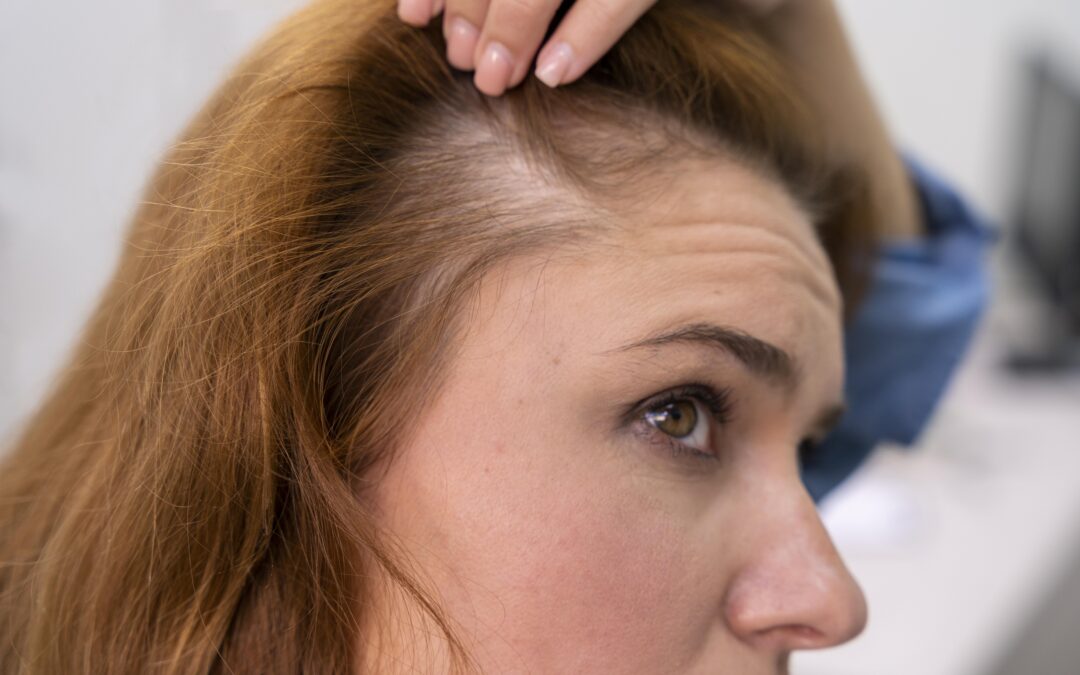
In PCOS, higher levels of androgens (hormones such as testosterone), often worsened by insulin resistance, can cause scalp hair follicles that are genetically sensitive to gradually shrink. This is called miniaturisation: hairs grow finer and shorter until some follicles stop producing visible hair. The result is usually thinning over the top of the scalp and a widening central parting, with the front hairline preserved.
Not all hair loss in women with PCOS is due to androgens. Shedding after illness or stress (telogen effluvium), iron deficiency and thyroid problems are common and can coexist. These need to be identified and treated, because a transplant will not help them.
How a hair transplant works, and why it is harder in women
A hair transplant moves follicles from the back and sides of the scalp (the donor area) to thinning areas. It works in men with pattern hair loss because donor follicles are usually resistant to androgens and keep growing after transplantation.
In women, this is less predictable:
- Thinning is often diffuse. It may extend into the donor area, so donor follicles may be fewer and less resistant. The International Society of Hair Restoration Surgery advises that women with diffuse thinning need careful assessment of whether donor follicles are resistant to miniaturisation.
- Over-harvesting a thin donor area can cause visible thinning there.
- Native hairs keep miniaturising. The hairs around the transplanted grafts are still affected by PCOS, so without medical treatment, the overall result can fade over time.
- Shock loss, a temporary shedding of existing hairs around the transplanted area, can occur after surgery, and is commonly reported in women. Most hairs regrow, but already miniaturised hairs may not.
Who may be a good candidate
- Hair loss that has been stable for a period on medical treatment, often around a year
- A defined area of thinning, such as the central parting or front of the scalp
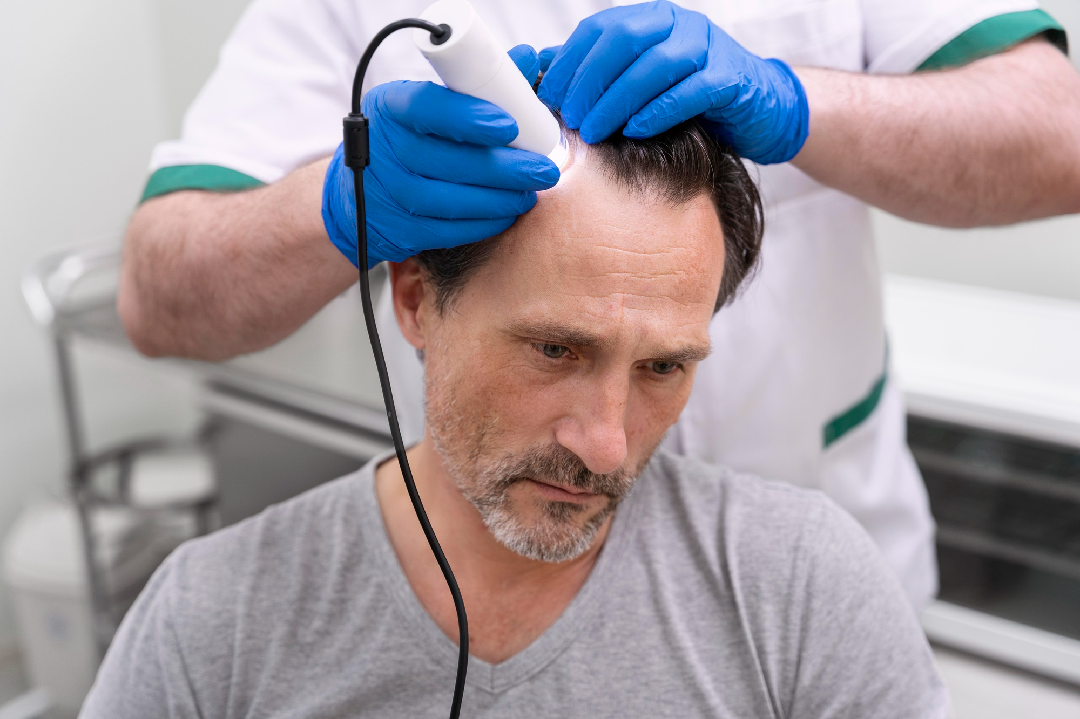
- A healthy donor area, with good density and little miniaturisation on trichoscopy (magnified scalp examination)
- PCOS, thyroid function and iron levels assessed and managed
- Realistic expectations, understanding that the goal is improved density, not a full head of hair as before
- Willingness to continue medical treatment after surgery
Who is usually not a good candidate
- Active, heavy shedding, or hair loss that is still progressing quickly
- Diffuse thinning that includes the donor area
- Untreated or unstable hormonal problems
- Hair loss from alopecia areata, or active scarring hair loss conditions
Medical treatment: the foundation
For most women with PCOS-related thinning, medical treatment is the first step, and it may be all that is needed. Evidence-based options, chosen by a dermatologist and often in coordination with a gynaecologist or endocrinologist, include:
- Topical minoxidil, the best-studied treatment for female pattern hair loss, and in selected patients, low-dose oral minoxidil
- Anti-androgen medicines such as spironolactone, which must not be taken during pregnancy
- Combined oral contraceptives, sometimes used in PCOS to reduce androgen levels
- Correcting iron deficiency or thyroid problems where present
- Weight loss, in women who are overweight, which can lower insulin and androgen levels
- Platelet-rich plasma (PRP) as an add-on in some cases, with modest and variable evidence
Medical treatment usually takes six to twelve months to show its full effect, and an increase in shedding in the first weeks of minoxidil is common and usually temporary.
If you do have a transplant
- Transplanted hairs usually shed within a few weeks, then start to regrow after about three to four months.
- The final result is generally assessed at twelve to eighteen months.
- Medical treatment should usually continue, to protect your existing hair.
- Techniques that avoid shaving the whole head are available and often preferred by women.
Questions to ask
- What is causing my hair loss, and is it stable?
- Is my donor area healthy enough, and was it examined with trichoscopy?
- What medical treatment should I start or continue first?
- What realistic improvement in density can I expect?
- What is the risk of shock loss or donor thinning in my case?
Important note
This article is for general health education only. It is not a substitute for an in-person consultation, diagnosis or treatment. The suitability and results of any treatment vary from person to person, and no treatment can promise a particular outcome. Please consult a qualified Registered Medical Practitioner about your own situation.
About the author: Dr. Prratyush More, Qualifications: M.B.B.S., D.D.V.L. | Trained in Israel, 2018, Registration No. 2011/11/3382 (Maharashtra Medical Council (MMC).
References
- Teede HJ, Tay CT, Laven JJE, et al. Recommendations from the 2023 International Evidence-based Guideline for the Assessment and Management of Polycystic Ovary Syndrome. J Clin Endocrinol Metab. 2023;108(10):2447–2469.
- Carmina E, Azziz R, Bergfeld W, et al. Female pattern hair loss and androgen excess: a report from the multidisciplinary Androgen Excess and PCOS Committee. J Clin Endocrinol Metab. 2019;104(7):2875–2891.
- Kanti V, Messenger A, Dobos G, et al. Evidence-based (S3) guideline for the treatment of androgenetic alopecia in women and in men – short version. J Eur Acad Dermatol Venereol. 2018;32(1):11–22.
- International Society of Hair Restoration Surgery. A guide to hair transplant for women. Accessed October 2026.