
― PAEDIATRIC DERMATOLOGY
Paediatric Dermatology —
Expert Skin Care for Children
Gentle, precise skin care for children of all ages — from newborns to teenagers. Specialist dermatological expertise combined with a warm, child-friendly approach and comprehensive parent guidance.
Eczema & Atopic DermatitisViral Skin InfectionsBirthmarks & NaeviNeonatal Skin Conditions
Why patients choose Dr. Prratyush More
✓ Child-Friendly Consultation Style
Gentle, age-adapted approach — child and parent both at ease
✓ Age-Safe Treatments Only
Paediatric dosages & formulations — no adult shortcuts
✓ Written Parent Guidance Always
Clear written instructions after every visit — no confusion
✓Certified Dermatologist
8+ years of specialist skin expertise including paediatrics
― WHAT IS IT
What is Paediatric Dermatology?
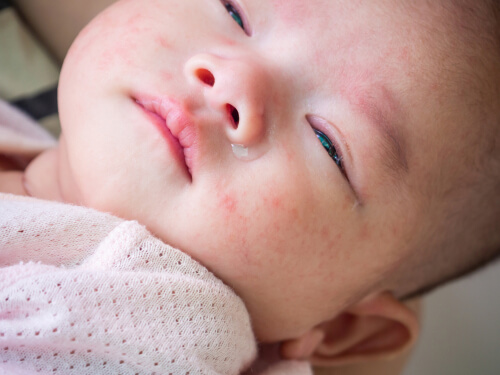
Paediatric dermatology diagnoses and treats skin, hair, and nail conditions in children — from premature newborns to teenagers at the threshold of adulthood. Children’s skin is biologically different from adult skin — thinner, more permeable, and more reactive — requiring a fundamentally different clinical approach.
Dr. More brings a calm, patient, genuinely child-friendly approach to every paediatric consultation. Examination technique, language, pace, and treatment selection are all adapted to each child’s age and temperament. Parents are active partners at every stage — never left confused or unsupported.
Newborns · Children · Adolescents · All Skin Conditions
Comprehensive paediatric dermatology from birth through adolescence — specialist expertise with a gentle, child-first approach in Vasant Vihar, Thane West.
― CONDITIONS WE TREAT
Paediatric Skin Conditions Treated
From the extremely common — eczema, warts, viral infections — to the rare and complex. Dr. More manages the full spectrum of skin conditions affecting children of all ages.
Eczema (Atopic Dermatitis)
Most common chronic skin condition in children — up to 20% worldwide.
Eczema (Atopic Dermatitis)
The most prevalent chronic skin condition in children. Intensive itch, skin barrier dysfunction, and recurrent flares significantly impact sleep, development, and family wellbeing. Dr. More identifies individual triggers, prescribes appropriate emollient and anti-inflammatory protocols, and builds a long-term management plan tailored to the child's age and severity.
Viral Skin Infections
Warts, molluscum, chicken pox complications — child-safe treatment.
Viral Skin Infections
Warts, molluscum contagiosum, chicken pox complications, and herpes simplex in children require treatment adapted to age, pain tolerance, and immune status. Dr. More selects the most appropriate and child-appropriate treatment method — minimising discomfort and maximising effectiveness.
Birthmarks & Naevi
Vascular birthmarks, pigmented naevi — monitoring and management.
Birthmarks & Naevi
Vascular birthmarks (port wine stains, haemangiomas), pigmented naevi, and dermal melanocytosis assessed for clinical significance, growth trajectory, and cosmetic impact. Dermoscopy guides assessment. Referral pathways coordinated where specialist intervention is indicated.
Neonatal & Infantile Skin Conditions
Neonatal acne, miliaria, seborrheic dermatitis — accurately identified.
Neonatal & Infantile Skin Conditions
Neonatal acne, infantile seborrheic dermatitis, erythema toxicum, miliaria, and transient neonatal rashes accurately identified and distinguished from conditions requiring treatment. Parents given clear, evidence-based guidance — reducing unnecessary anxiety and unnecessary medication.
Psoriasis in Children
Childhood psoriasis — different presentation, different approach.
Psoriasis in Children
Childhood psoriasis presents differently from adult psoriasis — often affecting the face, nappy area, and scalp with a distinct clinical pattern. Diagnosis requires dermatological expertise. Treatment is adapted to the child's age, body surface area affected, and impact on quality of life.
Allergic & Drug Reactions
Urticaria, angioedema, contact dermatitis — systematic evaluation.
Allergic & Drug Reactions
Urticaria, angioedema, contact dermatitis, and drug reactions in children require systematic evaluation to identify the causative allergen or trigger. Patch testing, clinical history analysis, and structured avoidance planning form the core of management for allergic skin conditions.
Acne in Adolescents
Hormonal acne in teenagers — medical treatment, no scarring.
Acne in Adolescents
Acne in adolescence causes significant psychological distress and can lead to permanent scarring if untreated or poorly managed. Dr. More treats all grades of adolescent acne with evidence-based, age-appropriate protocols — emphasising prevention of scarring and long-term skin health alongside immediate control.
Fungal & Bacterial Skin Infections
Impetigo, ringworm, pityriasis — accurate diagnosis, correct treatment.
Fungal & Bacterial Skin Infections
Impetigo, cellulitis, tinea corporis (ringworm), pityriasis versicolor, and other fungal and bacterial infections are common in children and frequently misdiagnosed. Dermoscopy and clinical assessment ensure correct diagnosis and targeted treatment — preventing antibiotic overuse and treatment failure.
Contact & Irritant Dermatitis
Nappy rash, school-related contact reactions — trigger identification.
Contact & Irritant Dermatitis
Nappy dermatitis, school-related contact reactions, shoe dermatitis, and nickel allergy are among the most common contact and irritant dermatoses in children. Trigger identification, avoidance advice, and appropriate barrier therapy form the management approach — with patch testing when indicated.
― OUR PROCESS
How We Approach Children’s Skin Care?
A child-first process — gentle, unhurried, and always involving the parent at every stage.
01
Child-Friendly Start
Age-Appropriate Consultation Beginning
Dr. More explains what will happen in simple, child friendly language adapted to the child’s age — so even young children understand and feel safe. The consultation room, approach, and pace are all calibrated to reduce anxiety and build trust from the first moment.
02
Clinical History
Comprehensive History from Parent & Child
Detailed history of onset, triggers, previous treatments, family history, dietary factors, school and home environment, and impact on the child’s sleep and daily life. Both parent and child are actively included in the conversation — each contributes important information.
03
Gentle Examination
Non-Invasive Clinical Examination
Physical examination adapted to the child’s comfort level. Microscopic examination where clinically indicated — providing magnified diagnostic information without any discomfort. No invasive procedures are performed without clear clinical necessity and full parental consent.
04
Diagnosis & Plan
Clear Diagnosis & Written Treatment Plan
Diagnosis explained to parent and child in accessible, plain language — no jargon. Written treatment plan covers the diagnosis, all medications (with application instructions), expected outcomes, timeline, and warning signs to watch for. Application technique demonstrated practically where relevant.
05
Follow-Up
Scheduled Review & Ongoing Parent Support
Follow-up to assess treatment response and adjust the plan. Parents are actively encouraged to reach out between visits for guidance. Dr. More’s team is accessible — ensuring you are never left managing a complex skin condition in your child without support.
― TREATMENT OUTCOMES
What You Can Expect?
Honest, realistic outcomes for children’s skin conditions — clearly communicated to parents at every stage.
Accurate Diagnosis from First Visit
Thorough clinical assessment, most paediatric skin conditions are accurately diagnosed at the first consultation — reducing the distress and expense of prolonged diagnostic uncertainty.
Reduced Parental Anxiety
A clear diagnosis with honest explanation and a structured management plan dramatically reduces parental anxiety — replacing fear and uncertainty with understanding and a clear path forward.
Visible Improvement Within 4–8 Weeks
Most acute skin conditions in children show visible improvement within 4–8 weeks of appropriate treatment. Chronic conditions like eczema and psoriasis are typically well-controlled within 3 months.
Long-Term Disease Management
For chronic conditions like eczema and psoriasis, the goal extends beyond treating the current flare — building a sustainable management plan that minimises recurrence and maximises the child’s quality of life.
― WHY DR. PRRATYUSH MORE
Why Choose Us for Your Child’s Skin Care?
Child-friendly expertise, age-safe treatments, comprehensive parent guidance — specialist skin care for children in Vasant Vihar, Thane West.
Specialist Expertise.
A Gentle, Child-First Approach.
Children are not small adults — and their skin conditions require a fundamentally different approach. Dr. More combines specialist dermatological expertise with a genuinely child-friendly consultation style. Every aspect of the visit — from the explanation to the examination — is adapted to make your child feel safe, understood, and cared for.
Paediatric-Specific Expertise
Clinical experience in the full spectrum of paediatric skin conditions — from neonatal rashes to adolescent acne. Children are not treated as small adults — their biology, medications, and needs are fundamentally different.
Age-Safe Treatment Protocols
All medications selected and dosed appropriately for the child’s age and weight. Products, potencies, and application frequencies are adapted — no adult formulations applied to children without age-appropriate adjustment.
Child-First Consultation Style
Consultation pace, language, and examination technique adapted to each child’s age and temperament. No rushing. No intimidating clinical language. No procedure without explanation. Children leave comfortable — parents leave confident.
Comprehensive Parent Guidance
Guidance, practical demonstration of application technique, and clear warning signs — provided at every visit. Parents are treated as partners in treatment. You are never left managing a skin condition without clear, accessible support.
Dual Skin & Hair Expertise
Many children with skin conditions also have scalp or hair involvement. Dr. More’s combined dermatology and trichology expertise allows comprehensive management in a single consultation — without needing referral elsewhere.
Progress Documentation
Standardised clinical photography at follow-up visits objectively tracks treatment response and motivates compliance. Seeing measurable improvement documented is reassuring for both parent and child.
― COMMON QUESTIONS
Frequently Asked Questions
Answers to the questions parents ask most frequently about their children’s skin conditions and dermatology care.
When should I take my child to a dermatologist rather than a paediatrician?
For skin-specific conditions — eczema not responding to paediatric treatment, psoriasis, unexplained rashes, birthmarks, warts, alopecia, or acne — a board-certified dermatologist with paediatric expertise provides more accurate diagnosis and more targeted treatment. A paediatrician manages general childhood health but is not trained in dermoscopy, trichoscopy, or specialist skin condition management. If the skin problem is persistent, spreading, or affecting your child’s quality of life, see a dermatologist.
Are steroid creams safe for children?
Topical steroids are safe when used correctly — the right potency for the right body area, at the correct frequency, for the appropriate duration. Misuse causes side effects; correct use is essential. Dr. More prescribes the lowest effective potency, explains exactly how and where to apply, and monitors treatment at every follow-up. The common fear of steroid creams leads many parents to under-treat eczema — causing unnecessary suffering. Fear-free, evidence-based guidance is provided at every consultation.
My baby has red, itchy patches — is it eczema?
Eczema is very common in infants, presenting as red, dry, itchy patches typically on the cheeks, scalp, and body folds. However, several other conditions can look similar — seborrheic dermatitis, contact dermatitis, fungal infections, and rare neonatal conditions. A clinical assessment with dermoscopy where needed provides accurate diagnosis at the first visit — so treatment is appropriate from day one, not guesswork.
Can eczema in children be permanently cured?
Eczema is a chronic relapsing condition — no permanent cure currently exists. However, most children with eczema improve significantly as they grow, with many achieving near-complete remission by adolescence. With effective management — appropriate emollients, trigger avoidance, and anti-inflammatory treatment when needed — flares are significantly reduced and quality of life greatly improved. Dr. More helps families build a long-term management plan, not just treat individual flares.
My child has warts on their hands — do they need treatment?
Many childhood warts resolve spontaneously within 2 years without treatment. Treatment is indicated when warts are painful, spreading rapidly, numerous, in cosmetically prominent locations, or causing significant distress. Treatment options — electrocautery, cryotherapy, chemical destruction, or immunotherapy — are selected based on the child’s age, wart type, location, and tolerance. Dr. More discusses the pros and cons honestly so you can make an informed decision.
What causes birthmarks and do they need treatment?
Birthmarks have various causes depending on type. Vascular birthmarks result from abnormal blood vessel formation. Pigmented naevi arise from melanocyte clusters. Most are completely benign. Some birthmarks — particularly large congenital melanocytic naevi or certain vascular lesions — require monitoring for change. Dermoscopy guides assessment. Treatment depends on type, size, location, and clinical concern. Dr. More provides an honest assessment and clear guidance on monitoring or referral where needed.
How do I know if my child's skin rash needs urgent attention?
Seek urgent care if the rash is accompanied by fever, rapidly spreading, involves blistering or skin peeling over large areas, or if your child appears unwell. Petechial or purpuric rashes (non-blanching red or purple spots) require immediate emergency assessment. For rashes without these features — persistent, itchy, or recurring rashes — a dermatology consultation provides accurate diagnosis without unnecessary alarm.
Can I use over-the-counter creams for my child's skin condition?
Many over-the-counter creams are ineffective for diagnosed skin conditions and some can cause harm — particularly fragranced products for eczema-prone skin, or strong antifungals without confirmed fungal diagnosis. A medical consultation costs far less than months of ineffective self-treatment and provides a precise diagnosis with an appropriate treatment. Dr. More strongly advises against sustained use of OTC steroid creams in children without medical supervision.
― Patient Stories
Trusted by Our Patients
Real experiences from real patients in Thane. Here’s what they say about their journey with Dr. Prratyush More.