
― TRICHOLOGY
Expert Hair Loss Treatment
& Trichology in Thane
The only dermatologist in Thane internationally trained in hair restoration under Dr. Alex Ginzburg, Israel. Evidence-based diagnosis and treatment for all hair loss conditions.
Hair Fall TreatmentAlopecia AreataGFC TherapyScalp Disorders
― WHAT IS IT
What is Trichology?
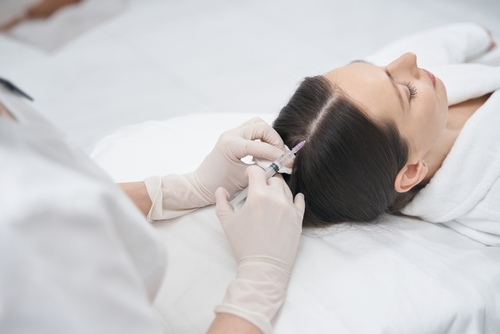
Trichology is the branch of dermatology specialising in the scientific study and treatment of diseases affecting the hair and scalp. Hair loss is deeply personal — it affects confidence, identity, and quality of life. At Dr. More’s clinic, every hair loss consultation starts with one principle: find the exact cause first.
Hair loss has over 30 distinct causes — androgenetic alopecia, alopecia areata, telogen effluvium, scalp infections, scarring conditions, and many more. Each requires a completely different treatment. Accurate diagnosis through clinical evaluation and targeted investigations (if required) is the only foundation for effective hair loss management.
Hair & Scalp · All Hair Loss Types · All Ages
From early-stage hair thinning to advanced alopecia — comprehensive trichological care for men, women, and children at every stage.
― HAIR LOSS CONDITIONS WE TREAT
Our Trichology Services
From common androgenetic alopecia to rare scarring conditions — Dr. More diagnoses and manages the full spectrum of hair and scalp disorders.
Male Pattern Baldness (AGA)
Androgenetic alopecia — medical management for all grades.
Male Pattern Baldness (AGA)
Androgenetic alopecia affecting over 50% of men by age 50. Comprehensive medical management including clinically proven medications, growth factor therapy, and structured maintenance protocols for all grades of hair loss.
Female Hair Thinning (FPHL)
Hormonal workup, targeted treatment.
Female Hair Thinning (FPHL)
Frequently misdiagnosed or dismissed as normal ageing. Dr. More conducts detailed hormonal workup, trichoscopy, and targeted investigations to identify the precise cause — and designs treatment accordingly.
Alopecia Areata
Autoimmune patchy hair loss — evidence-based management.
Alopecia Areata
An autoimmune condition causing patchy hair loss. Prognosis varies widely from single patches that resolve spontaneously to extensive loss requiring aggressive management. Treatment is evidence-based and tailored to extent and duration.
Telogen Effluvium
Diffuse shedding from stress, deficiency or thyroid issues.
Telogen Effluvium
Diffuse shedding triggered by stress, nutritional deficiencies, thyroid disorders, post-pregnancy hormonal shifts, or crash dieting. Investigations identify the trigger precisely — treatment follows the cause, not the symptom.
Growth Factor Therapy (GFC)
Advanced hair restoration using your own growth factors.
Growth Factor Therapy (GFC)
Advanced hair restoration using concentrated growth factors from the patient's own blood. Growth Factor Concentrate (GFC) delivers higher platelet concentration than conventional methods — stimulating dormant follicles and improving hair shaft diameter. Zero risk of allergic reaction.
Scalp Psoriasis & Seborrheic Dermatitis
Chronic scalp conditions causing scaling, itch, hair loss.
Scalp Psoriasis & Seborrheic Dermatitis
Chronic scalp conditions causing scaling, itching, inflammation, and secondary hair loss. Accurate differential diagnosis between psoriasis and seborrheic dermatitis is critical — they require different treatments. Dr. More applies dermoscopy for precise distinction.
Tinea Capitis (Scalp Fungal Infection)
Fungal scalp infection — commonest cause of hair loss in children.
Tinea Capitis (Scalp Fungal Infection)
The commonest cause of hair loss in children in India and frequently misdiagnosed in adults. KOH mount and culture confirm diagnosis. Appropriate systemic and topical antifungal treatment leads to complete recovery when started early.
Traction Alopecia
Hair loss from repeated pulling — early diagnosis prevents permanence.
Traction Alopecia
Hair loss from prolonged tight hairstyles — braids, extensions, tight ponytails. Reversible if caught early. Permanent scarring of follicles occurs with long-standing traction. Dr. More advises on style modification and medical support for follicular recovery.
Scarring Alopecias
Lichen planopilaris, frontal fibrosing — requires urgent intervention.
Scarring Alopecias
A group of conditions causing permanent destruction of hair follicles — lichen planopilaris, frontal fibrosing alopecia, and discoid lupus. Early diagnosis and prompt treatment are essential to halt progression. Dr. More has specific expertise in managing these conditions.
― OUR PROCESS
How We Diagnose & Treat Hair Loss?
A methodical, evidence-based approach — from the clinical evaluation to long-term monitoring.
01
Hair Loss Assessment
Detailed Trichological History
A comprehensive hair loss history — onset, pattern, rate of shedding, family history, dietary habits, stress levels, medications, and hormonal history. This clinical interview is the foundation of accurate diagnosis in trichology.
02
Investigation
Targeted Blood Investigations When Indicated
Complete blood count, iron studies, thyroid function, hormone profile, vitamin D, zinc, and other investigations — ordered selectively based on clinical presentation. Every investigation is clinically justified and explained.
03
Treatment
Personalised Treatment Protocol
Written treatment plan covering diagnosis, medications, in-clinic procedures (Growth Factor Therapy, microneedling, or Exosome therapy as appropriate), lifestyle modifications, and expected timelines.
04
Follow-Up
Monitoring & Long-Term Management
Follow-up at 3–4 week intervals tracking hair thickness & desnsity improvement, assessing medication response, and adjusting the protocol. Hair loss management is a long-term process — Dr. More supports you through every stage.
― TREATMENT OUTCOMES
What You Can Expect?
Honest, realistic outcomes based on 11+ years of trichological practice and thousands of successfully treated hair loss patients.
Accurate Root-Cause Diagnosis
Hair analysis combined with targeted investigations identifies the precise cause — enabling treatment that addresses the root problem, not just visible symptoms.
Measurable Hair Density Improvement
Growth Factor Therapy shows measurable improvement in hair density and shaft diameter on hair analysis after 3–6 months. Outcomes are documented objectively — not just perceived.
Stabilisation Within 3 Months
Most active hair loss conditions show significant stabilisation within 3 months of appropriate treatment. Halting progression is the first and most important goal.
Long-Term Hair Preservation
The goal is preserving existing hair density long-term, not just transient regrowth. Maintenance protocols are planned from the start — not added as an afterthought.
― WHY DR. PRRATYUSH MORE
Why Choose Us for Hair Loss Treatment?
Through Hair Analysis, Israel trained hair specialist & combined with Growth Factor Therapy at Dr Prratyush’s practice in Vasant Vihar, Thane West.
The Only Israel-Trained Hair Specialist in Thane.
Dr. Prratyush More’s trichology practice is built on one foundation: accurate diagnosis before treatment. Every patient undergoes hair analysis. Every treatment plan is evidence-based. Every outcome expectation is honest.
Israel-Trained Hair Restoration Specialist
Specialised training under Dr. Alex Ginzburg — one of the world’s renowned hair restoration experts. The only dermatologist in Thane with this specific international distinction.
Hair Analysis at Every Consultation
Hair analysis at every visit — not just the first time.
Growth Factor Therapy (GFC) — Advanced Treatment
Growth Factor Concentrate therapy delivers higher growth factor concentrations than conventional plasma therapy. Clinically superior outcomes with the same principle — no foreign substances, no risk of allergic reaction.
Realistic Expectations - About Hair Regrowth
Dr. More gives you an honest, realistic assessment of what can genuinely be achieved. No impossible guarantees. No expensive supplements without evidence. Just clinical truth.
Personalised Protocol — Not a Package
Treatment plans are individualised based on diagnosis, grade, age, hormonal status, and health. Never a pre-packaged deal. Every prescription is clinically indicated.
― COMMON QUESTIONS
Frequently Asked Questions
Answers to the questions patients ask most frequently about hair loss and trichology at our clinic.
What is the difference between GFC and conventional growth factor treatments?
Growth Factor Concentrate (GFC) delivers significantly higher growth factor concentrations compared to conventional methods. The preparation protocol preserves more active growth factors with greater consistency. Clinical studies show superior outcomes in hair density and shaft diameter improvement. GFC uses your own blood with no foreign substances — zero risk of allergic reaction.
How many sessions are needed for Growth Factor Therapy?
Most protocols involve 3–4 sessions spaced 4–6 weeks apart for the induction phase, followed by maintenance sessions every 3–6 months. The exact number is determined by hair loss grade, your response to treatment, and trichoscopy findings at each visit.
Is hair loss treatment permanent?
Effectiveness depends on the underlying cause. Androgenetic alopecia is a genetic, progressive condition — treatment controls progression and maintains density but does not permanently cure the condition. Telogen effluvium, tinea capitis, and nutritional deficiency-related hair loss can be completely reversed with appropriate treatment.
Can women take finasteride for hair loss?
Finasteride is not recommended for pre-menopausal women due to teratogenic risks. Alternative hormonal treatments such as spironolactone, cyproterone acetate, or minoxidil are appropriate options depending on hormonal profile and health status. Dr. More tailors treatment individually for female hair loss.
What investigations are needed for hair loss?
Not all hair loss requires extensive investigation. For typical male androgenetic alopecia, trichoscopy alone may be sufficient. For female hair loss, diffuse shedding, or atypical patterns — blood investigations including iron studies, thyroid function, hormone profile, and vitamin D are clinically indicated and ordered selectively.
I have been losing hair for years — is it too late for treatment?
It depends on the extent of follicular miniaturisation and scarring. Trichoscopy assesses follicular viability — viable miniaturised follicles can still respond to treatment. Completely destroyed follicles cannot. An honest assessment at consultation will tell you exactly what is and is not achievable.
Does stress cause hair loss?
Severe physical or emotional stress triggers telogen effluvium — a diffuse shedding that typically begins 2–3 months after the stressful event. This is usually self-limiting and resolves with time and nutritional support. Ongoing chronic stress can perpetuate shedding. Dr. More distinguishes stress-related from other causes at trichoscopy.
Can hair loss be prevented with the right diet?
Nutritional deficiencies — particularly iron, vitamin D, zinc, and protein — contribute to hair shedding and can be corrected with supplementation. However, genetic hair loss is not preventable with diet alone. A balanced diet is necessary but not sufficient for androgenetic alopecia management.
― Patient Stories
Trusted by Our Patients
Real experiences from real patients in Thane. Here’s what they say about their journey with Dr. Prratyush More.