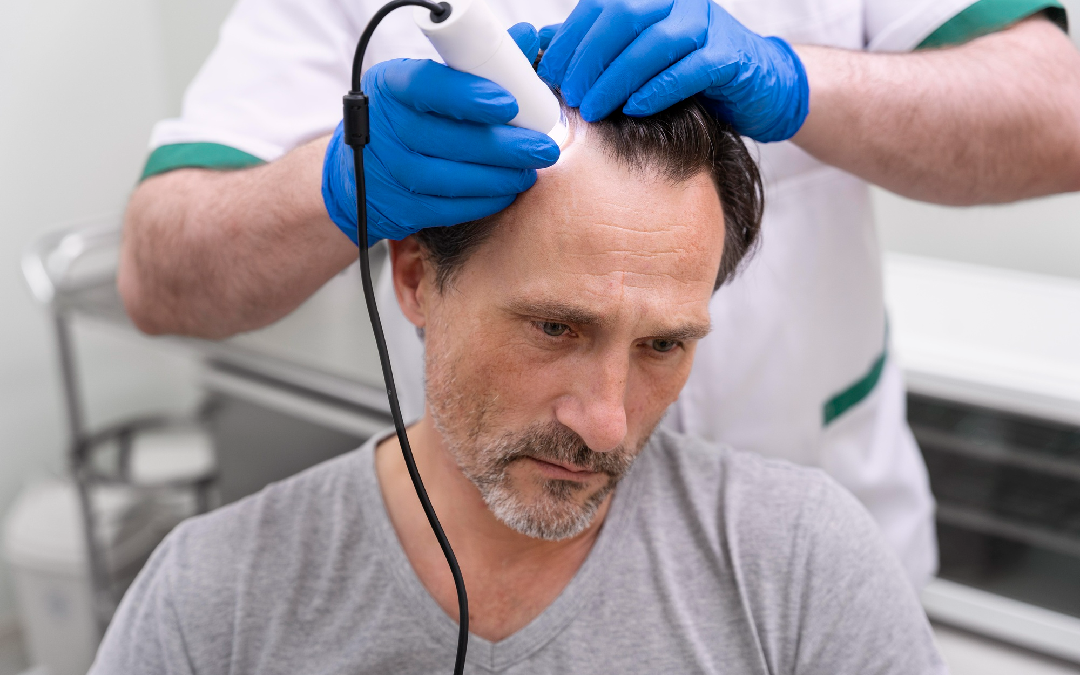
FotoFinder Trichoscale AI is software that reads magnified scalp images and counts your hairs, measures their thickness and works out how many are thin or resting. It doesn’t diagnose hair loss on its own. It gives the dermatologist hard numbers to back up the examination and to track whether treatment is working, which makes it useful at any skin clinic in Thane that treats hair loss.
“Is my hair actually getting better, or am I imagining it?” Almost everyone on hair loss treatment asks this at some point. Mirrors lie, lighting changes, and a bad hair day can undo three months of optimism.
That’s the problem AI hair analysis is meant to solve. Instead of comparing photos by eye, it measures the same patch of scalp at each visit and turns it into numbers. Here’s what it does, how a session works, and where the doctor still has to take over.
What is FotoFinder Trichoscale AI and what does it measure?
Trichoscale AI is hair analysis software from FotoFinder Systems, a German medical imaging company. It works with a digital dermoscope that magnifies the scalp, then uses trained algorithms to count hairs in a marked area and measure each one. The output is a set of figures you can compare from visit to visit.
The main measurements are:
- Hair density: How many hairs grow per square centimetre in the measured area.
- Hair thickness: The diameter of each shaft, which shows whether hairs are thinning (miniaturising).
- Thin versus thick hair ratio: A shift towards fine hairs is an early sign of pattern hair loss.
- Growing versus resting hairs: A rough guide to how much hair is in the shedding phase.
Dr Prratyush More’s clinic is setting up the FotoFinder medicam 1000s with Universe 3.5 and Trichoscale AI. Until installation is complete, trichoscopy continues on the equipment already in use, so ask at booking which system your assessment will use.
How does an AI hair analysis session work?
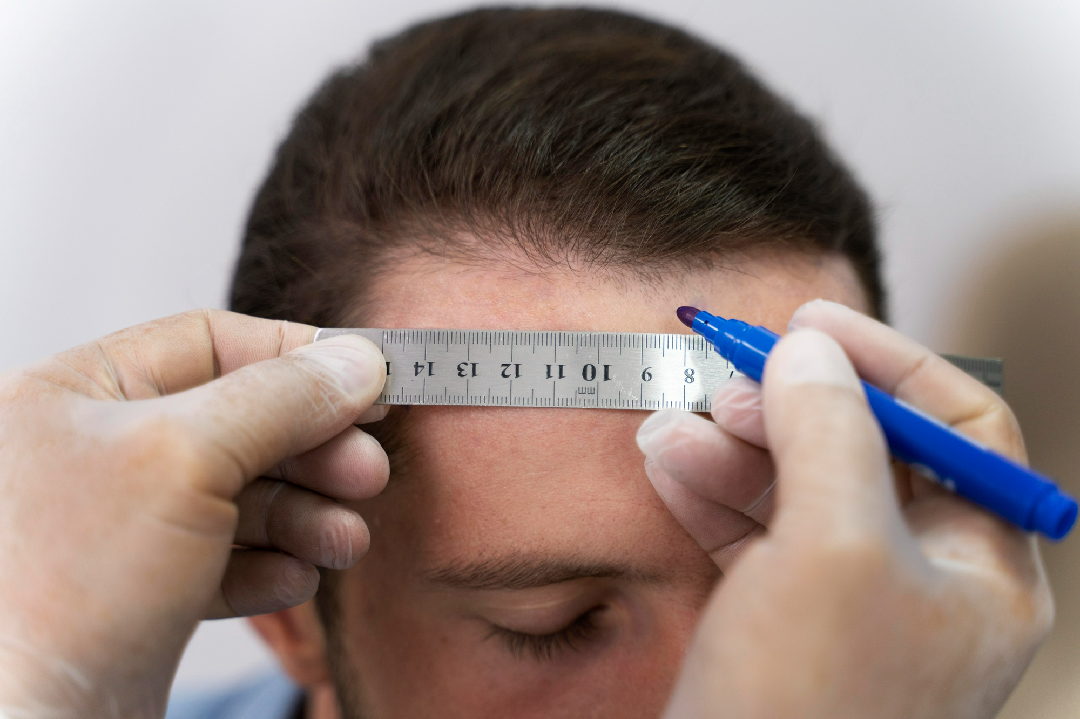
A session takes about 15 to 45 minutes and doesn’t hurt. A small area of the scalp is marked, the dermoscope photographs it at high magnification, and the software analyses the image. The same spot is measured again at later visits, so the numbers line up.
Step 1: History and examination
The dermatologist asks about your hair loss pattern, timeline, medicines, diet and family history, then examines the scalp. Software can’t replace this part. Many causes of hair loss, like thyroid problems or low iron, only show up through questions and blood tests.
Step 2: Marking the area
A small, consistent patch is chosen, often where thinning is starting. In some protocols the hair there is clipped short so the camera can see every shaft at skin level. The exact spot is recorded so it can be found again at the next visit.
Step 3: Imaging and analysis
The dermoscope captures magnified images and the AI counts and measures the hairs. You can usually see the images on screen and have them explained as they’re taken. Nothing touches the scalp except the lens.
Step 4: Baseline and follow-up
The first scan is your baseline. Repeat scans every three to six months show whether medicines, GFC or PRP, or a transplant are actually making a difference. Changes are compared against the baseline rather than against how your hair looked last week.
What can AI hair analysis tell you that a mirror can’t?
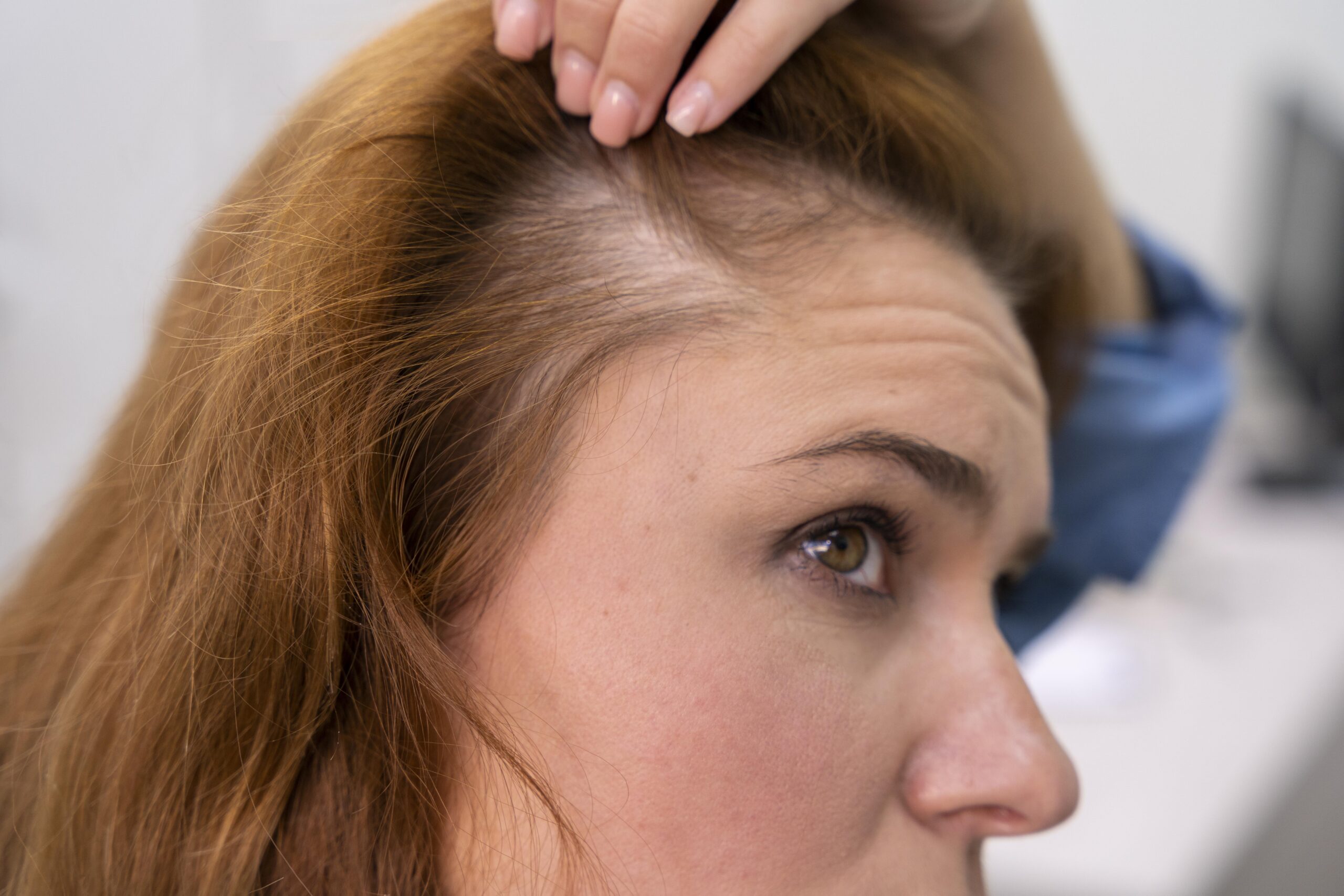
It turns “I think it’s thinner” into a measurement. Early pattern hair loss shows up as more fine hairs before any bald patch appears, and density changes of a few hairs per square centimetre are invisible in a mirror but clear on a scan.
| What the scan measures | What it can suggest | Why it matters |
| Falling density over time | Ongoing hair loss | Treatment may need changing |
| More fine hairs than thick | Miniaturisation, typical of pattern loss | Points towards androgenetic alopecia |
| Rising thickness after treatment | Treatment response | Shows the plan is working |
| Normal counts despite heavy shedding | Shedding phase, not thinning | Often settles with time |
That last row matters more than people expect. Plenty of patients come in convinced they’re going bald after a stressful few months. A normal density reading, read alongside the examination, can be reassuring.
If you’d like a measured baseline before you start or switch hair treatment, a hair loss consultation with trichoscopy is a good starting point.
Where does AI stop and the dermatologist take over?
AI measures. The dermatologist diagnoses. Software can count hairs and flag patterns, but it can’t take a history, spot a scarring alopecia, order blood tests, or decide whether thinning is from thyroid trouble, iron deficiency or genetics. The scan supports the doctor’s examination; it never replaces it.
The research backs this up. A 2026 study gave the same trichoscopy images to 15 dermatologists and to publicly available AI models, and the dermatologists reached the right diagnosis 68.3% of the time against 44.4% for the AI. Those were general-purpose AI tools rather than dedicated hair software, but the gap shows why reading the image still needs a trained specialist.
Older automated tools showed why caution is fair. A Mumbai study of an earlier hair-counting software, TrichoScan, found that more than 85% of healthy volunteers were flagged with an abnormal resting-hair percentage, with errors where hairs crossed or several grew from one opening. Today’s systems are better, but the lesson stands: a trained eye checks the numbers.
Here’s what stays with the doctor:
- Diagnosis: Telling pattern loss from alopecia areata, telogen effluvium, fungal infection or scarring alopecia.
- Investigations: Deciding on blood tests such as iron, thyroid or vitamin levels.
- Treatment choice: Matching medicines, procedures or surgery to the cause and to you.
You can read more about how hair loss is assessed on our trichology page.
Can the same dermoscope help with skin, moles and acne scars?
Yes. The same digital dermoscope magnifies skin, nails and moles up to 400 times and stores dated images. That’s how moles are tracked for change, and how skin is examined before laser and scar procedures, including acne scar treatment in Thane.
Mole checks and mapping
Stored images let the doctor compare the same mole months apart and spot changes in size, shape or structure. It’s painless and quick, and most people with lots of moles find the record reassuring. Our page on digital dermoscopy and mole mapping explains the service.
Before laser and scar treatment
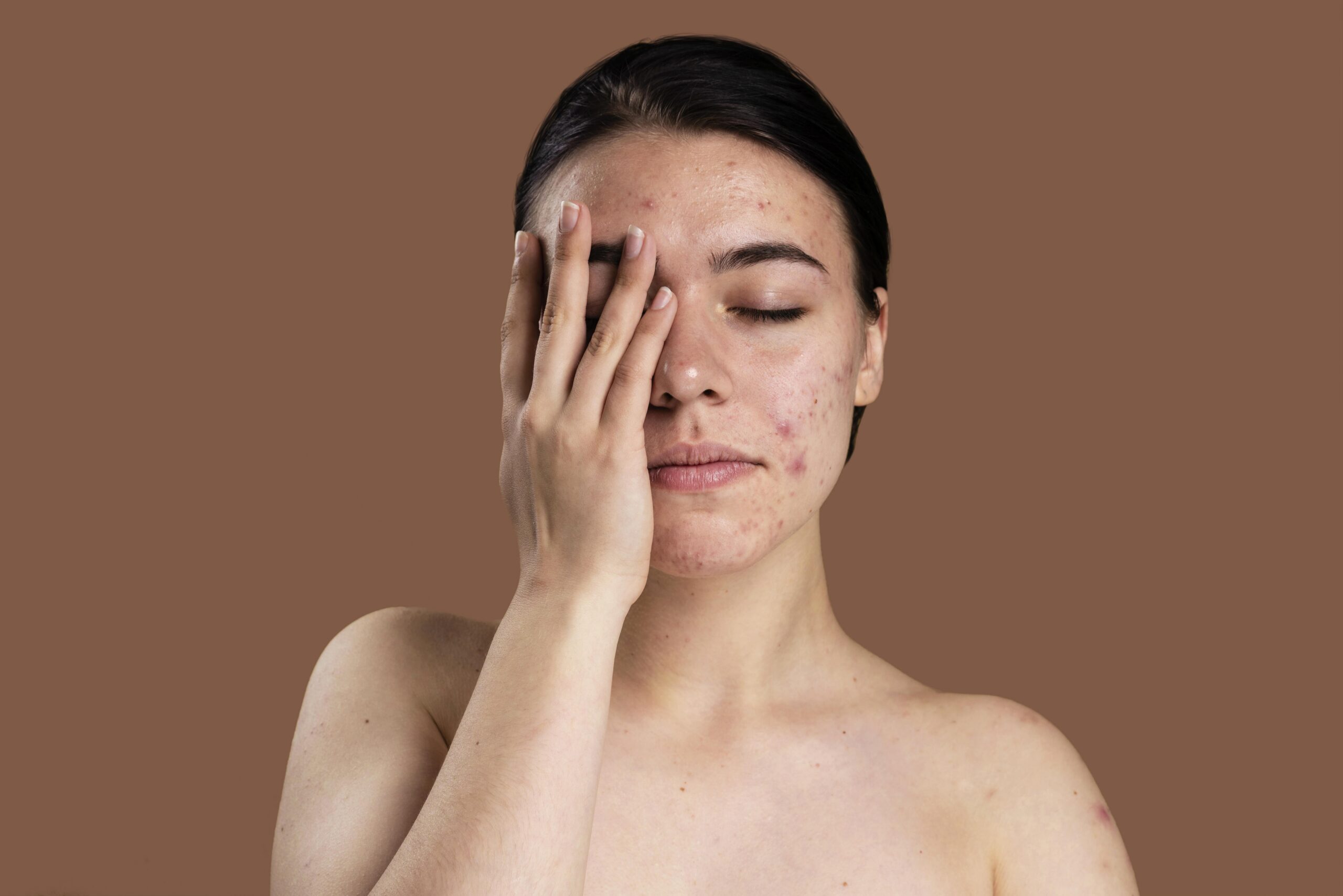
Dermoscopy before a procedure helps confirm what’s being treated, such as pigment depth or scar type, so the right method is chosen. Anyone considering acne scar treatment in Thane benefits from that check first. Deep ice-pick scars, rolling scars and post-acne marks each need a different approach, and the magnified view helps tell them apart.
FAQs
Can AI diagnose the cause of my hair loss?
No. AI software measures hair density, thickness and fine hairs, which helps the doctor, but diagnosis needs a history, scalp examination and sometimes blood tests. The dermatologist makes the diagnosis; the software provides supporting measurements.
Does a Trichoscale AI hair analysis hurt?
No. The dermoscope is simply placed against the scalp to take magnified images. A small area may be marked or clipped short so hairs can be counted, but nothing is injected or removed.
How often should hair density be measured?
Usually at baseline and then every three to six months while you’re on treatment. Hair grows slowly, so measuring more often rarely shows meaningful change and can cause needless worry.
Is AI hair analysis useful for women?
Yes. Female pattern hair loss often shows as diffuse thinning without a bald patch, which is hard to judge by eye. Density and thickness measurements help confirm it early and track response to treatment.
Do I need AI analysis before a hair transplant?
It’s helpful, not essential. Measuring donor density and the thinning area gives the surgeon better information for graft planning, and repeat scans after surgery show how the native hair around the transplant is holding up.
Measured hair care at our Vasant Vihar clinic
Dr Prratyush More is a dermatologist (MBBS, DDVL) in Vasant Vihar, Thane West, who examines every hair loss patient personally and uses trichoscopy to measure rather than guess. Hair loss consultations include history, scalp examination and, where needed, blood investigations, with a written plan at the end.
Fees are published up front: a hair loss consultation is ₹1,500, or ₹2,500 with trichoscopy. Procedure charges are given in writing before any treatment starts. There are no free consultations, offers or packages, and the site carries no before-and-after photos or testimonials, because results vary from person to person.
Numbers won’t fix hair loss on their own, but they stop you guessing about whether treatment is working. If you want a proper baseline and a clear diagnosis, schedule an appointment for a hair loss consultation with trichoscopy.