
― HAIR TRANSPLANT SURGERY
FUE Hair Transplant in Thane —
Israel-Trained Specialist
Advanced FUE hair transplant surgery by Thane’s only dermatologist trained in Israel under Dr. Alex Ginzburg. Permanent, natural-looking hair restoration — with honest planning, artistic hairline design.
FUE Hair Transplant ThaneBio FUE Hair TransplantIsrael-Trained SurgeonHairline Design
Why patients choose Dr. Prratyush More
✓ Israel-Trained FUE Specialist
Trained under Dr. Alex Ginzburg — only in Thane
✓ Honest & Detailed Consultation
Precise graft count, realistic outcome
✓ Permanent Natural Results
DHT-resistant grafts — grow for life, completely natural
― WHAT IS FUE HAIR TRANSPLANT
Hair Transplant Surgery —What You Need to Know
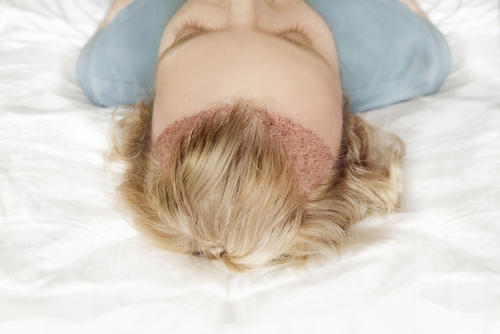
Hair transplant surgery is the only permanent solution to hair loss — transplanting genetically DHT-resistant follicles from the donor area to thinning or bald regions. When performed by a trained surgeon with proper technique, results are completely natural, permanent, and undetectable.
In Thane, hair transplant surgery is available at many clinics — but the difference in outcome between a trained specialist and a commercial chain is enormous and irreversible. Dr. Prratyush More trained specifically in advanced FUE surgery in Israel under Dr. Alex Ginzburg — one of the world’s foremost hair restoration authorities — bringing international surgical standards to his Vasant Vihar practice.
FUE · Hairline Design · Beard & Eyebrow
The complete range of hair restoration surgical procedures — performed by a board-certified dermatologist with verifiable international surgical training.
― PROCEDURES WE OFFER
Hair Transplant & Restoration Procedures
From primary FUE scalp transplant to beard, eyebrow, and scar revision — the complete range of hair restoration surgery by an Israel-trained specialist.
Crown & Vertex Restoration
Technically demanding — requires strategic planning for longevity.
Crown & Vertex Restoration
Crown and vertex restoration requires significantly more grafts per square centimetre and careful planning for future hair loss. Transplanting to the crown without a long-term plan can create an unnatural isolated island of hair as surrounding hair recedes. Dr. More advises honestly on realistic crown coverage based on donor availability and grade of loss.
Beard & Moustache Transplant
Facial hair restoration — natural density and pattern.
Beard & Moustache Transplant
Sparse beard, patchy moustache, or scarred facial hair areas restored using scalp or body hair grafts. Beard transplants require precise attention to follicle angle and emergence pattern for a natural result. Popular among men with patchy beard growth or facial scars affecting hair growth. Performed under local anaesthesia with rapid recovery.
Eyebrow Transplant
Precision follicle placement for natural eyebrow density.
Eyebrow Transplant
Eyebrow hair loss from over-plucking, scarring, thyroid conditions, or alopecia areata restored with carefully placed single-hair follicle grafts. Eyebrow transplantation requires exceptional precision — incorrect angle or direction produces unnatural results. Dr. More's extensive FUE training ensures technically correct, aesthetically natural eyebrow restoration.
Scar Revision Transplant
Camouflage of scars from surgery, trauma or prior transplants.
Scar Revision Transplant
Scars from scalp surgery, trauma, traction injuries, or previous poor hair transplant procedures can be significantly improved by transplanting follicles into scar tissue. Scar tissue has reduced blood supply — requiring specific surgical technique and realistic expectation setting. Dr. More has specific training in scar revision transplantation from his Israel fellowship.
Growth Factor Therapy (GFC) for Transplant
Accelerates healing and improves graft survival post-transplant.
Growth Factor Therapy (GFC) for Transplant
Growth Factor Concentrate (GFC) therapy applied at the time of hair transplant surgery accelerates wound healing, reduces post-operative shedding, and improves graft survival rates. GFC is prepared from the patient's own blood — zero risk of allergic reaction. Used as an adjunct to FUE transplant for optimised outcomes, not as a standalone hair loss treatment.
NRI & International Patient Hair Transplant
Pre-travel video consultation — efficient, cost-effective surgical visit.
NRI & International Patient Hair Transplant
Patients travelling from the UK, USA, UAE, Australia, and across India for hair transplant surgery under Israel-trained expertise at accessible costs. Video pre-consultation with Dr. More before travel — assessment, planning, and cost confirmation done in advance. Surgery, follow-up, and discharge guidance all managed efficiently within a structured visit timeline.
FUE Hair Transplant
Gold standard — follicle-by-follicle extraction, no linear scar.
FUE Hair Transplant
Follicular Unit Extraction (FUE) is the gold standard in modern hair transplant surgery. Individual follicular units are extracted one by one from the donor area using a precision micro-punch — leaving no linear scar. Grafts are then implanted at the correct angle, direction, and density for completely natural results. Dr. More trained in advanced FUE techniques under Dr. Alex Ginzburg in Israel.
Hairline Design & Restoration
Artistic, age-appropriate hairline — designed for life.
Hairline Design & Restoration
A natural-looking hairline is the most critical and most visible element of a successful hair transplant. Dr. More designs hairlines based on facial structure, age, bone landmarks, and long-term hair loss progression — not just current density preference. An over-aggressive hairline that looks unnatural at 60 is not a success at 35.
― THE SURGICAL PROCESS
How Your Hair Transplant Is Planned & Performed?
A meticulous, five-stage process — from trichoscopy consultation to 12-month result assessment.
01
Hair Transplant Consultation
Donor Assessment & Honest Planning
Comprehensive trichoscopic assessment of donor density, hair shaft characteristics, scalp laxity, and recipient area requirement. Honest discussion of realistic coverage — how many grafts are available, what can be achieved in one session versus multiple sessions, and the long-term plan accounting for future hair loss progression. No commitments before you understand exactly what is achievable.
02
Pre-Operative Preparation
Medical Clearance, Hair Wash & Donor Area Preparation
Blood investigations, blood pressure check, and medication review completed before surgery day. Specific instructions on hair washing, medications to stop, and what to eat and wear on the day. The donor area is trimmed to the optimal length for graft extraction. Pre-operative photographs are taken for standardised comparison at follow-up.
03
Anaesthesia & Extraction
Local Anaesthesia & Precision FUE Graft Extraction
Tumescent local anaesthesia administered to the donor area — completely pain-free extraction follows. Follicular units extracted individually using a precision micro-punch under magnification. Grafts stored in a chilled holding solution to maximise viability during the procedure. Extraction pattern planned to preserve donor area density and avoid visible thinning.
04
Recipient Site Creation & Implantation
Artistic Site Creation & Graft Placement
Recipient sites created at the correct angle, direction, and density — mimicking the natural hair growth pattern of the region being restored. Grafts implanted immediately after site creation to minimise time outside the scalp. Single-hair grafts placed at the hairline for a natural transition; multi-hair grafts used behind for density. Every graft placed with precision.
05
Post-Operative Care & Follow-Up
Aftercare Protocol, Shedding Guidance & Long-Term Review
Comprehensive written post-operative instructions covering sleeping position, washing technique, activity restrictions, and what to expect week by week. The shedding phase (weeks 2–6) is explained in advance — it is normal and expected. Growth assessment at 6 months and 12 months with trichoscopy and standardised photography documenting your result objectively.
― SURGICAL OUTCOMES
What You Can Expect?
Permanent results. Natural appearance. Restored confidence. Assessed objectively at 6 and 12 months with standardised trichoscopy and photography.
Natural-Looking, Permanent Results
Transplanted hair follicles are genetically resistant to DHT — they grow permanently for life. When placed correctly at the right angle and density, results are completely undetectable as transplanted hair.
Visible Growth from 4–6 Months
Initial growth begins at 3–4 months. Significant density visible at 6 months. Full result assessed at 12–18 months. Trichoscopy and standardised photography at each review objectively documents your progress.
Restored Confidence & Self-Image
Hair loss profoundly affects self-confidence, professional image, and personal relationships. A well-executed hair transplant restores not just hair — it restores confidence. Patients consistently report transformative impact on quality of life.
Single Session for Most Patients
Most patients with grade 3–5 hair loss achieve their desired result in a single well-planned session of 2,000–4,000 grafts. Honest pre-operative planning sets accurate expectations so you know exactly what will be achieved.
― WHY DR. PRRATYUSH MORE
Why Choose Dr. More for Your Hair Transplant?
Israel-trained precision, honest planning, artistic design — the standard every hair transplant deserves.
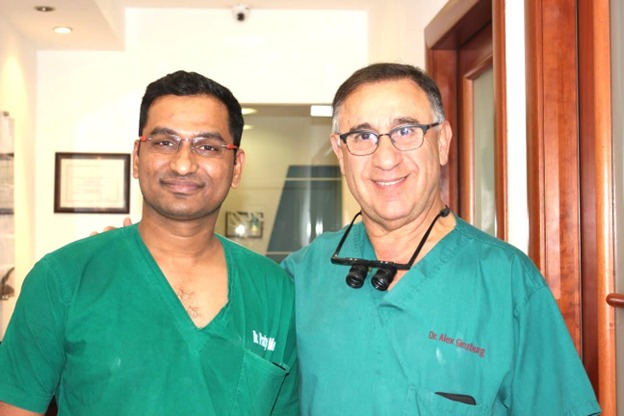
The Only Israel-Trained
Hair Transplant Surgeon in Thane.
In a market crowded with commercial hair transplant chains and under-trained technicians, Dr. Prratyush More stands apart by a verifiable clinical margin. His surgical fellowship in Israel under Dr. Alex Ginzburg — one of the world’s most respected names in hair restoration — is not a marketing tagline. It is documented, verifiable specialist training that directly translates into superior surgical outcomes.
Israel-Trained FUE Specialist — Unique in Thane
Dr. Prratyush More trained in advanced FUE hair transplant surgery under Dr. Alex Ginzburg — one of the world’s foremost hair restoration surgeons — in Israel. He is the only dermatologist in Thane with this specific international surgical fellowship. This is not a marketing claim. It is a verifiable clinical credential.
Certified Dermatologist & Surgeon
Hair transplant surgery requires both surgical precision and deep understanding of hair biology — follicle structure, growth cycles, DHT sensitivity, and donor management. As a board-certified dermatologist with DDVL qualification, Dr. More brings both dimensions to every procedure.
Honest Consultation — No Overselling
You will never leave a consultation with inflated graft counts, unrealistic promises, or a pressure to book immediately. Dr. More tells you exactly what can be achieved, what cannot, and why. If you are not a suitable candidate, he will say so. This honesty is what separates medical hair restoration from commercial hair transplant chains.
Artistic Hairline Design
Technical extraction skill is necessary but not sufficient. Natural results require an artistic eye for facial proportion, hairline geometry, angle, and density distribution. Dr. More designs each hairline individually — factoring in age, face shape, expected future hair loss, and the patient’s own aesthetic preference.
Long-Term Donor Management
The donor area is a finite resource. Aggressive extraction in a single session may look impressive initially but leaves insufficient donor hair for future procedures or creates visible donor thinning. Dr. More plans extraction conservatively and strategically — preserving your options for the long term.
― COMMON QUESTIONS
Hair Transplant — Frequently Asked Questions
Honest answers to the questions every hair transplant candidate asks — covering candidacy, grafts, results, recovery, and more.
Am I a good candidate for hair transplant surgery?
The ideal candidate has stable hair loss (not actively progressing rapidly), adequate donor hair density at the back and sides of the scalp, realistic expectations about what can be achieved, and good general health. Age, grade of hair loss, donor density, hair characteristics, and long-term hair loss pattern are all assessed at consultation. Dr. More conducts trichoscopy of both donor and recipient areas to determine candidacy accurately — not based on photographs alone.
How many grafts will I need?
This depends entirely on the area to be covered and your desired density. Grade 3 hair loss typically requires 1,500–2,500 grafts. Grade 4–5 requires 2,500–3,500 grafts. Grade 6 may require 3,500–5,000+ grafts across multiple sessions. Donor density, scalp laxity, and hair characteristics also influence the effective yield. Dr. More provides a precise graft estimate at trichoscopy consultation — not a range designed to upsell.
Is hair transplant surgery painful?
The procedure is performed under local anaesthesia — once administered, you feel no pain during extraction or implantation. The anaesthetic injections are the most uncomfortable part and take 5–10 minutes. The surgery itself — which lasts 6–10 hours for a large session — is completely pain-free. Mild soreness and tightness in both donor and recipient areas are common for 2–5 days post-operatively and are managed with standard oral analgesics.
When will I see results after hair transplant?
Most transplanted hairs shed within the first 2–6 weeks — this is normal and expected. New growth begins at 3–4 months. Significant, noticeable density appears at 6 months. The final result is assessed at 12–18 months when all transplanted follicles have completed their first full growth cycle. Trichoscopy at 6 and 12 months documents growth objectively — you see the evidence, not just feel it.
What is the difference between FUE and DHI?
FUE (Follicular Unit Extraction) is the extraction technique — individual follicles removed with a micro-punch. DHI (Direct Hair Implantation) is an implantation technique using a Choi implanter pen that combines site creation and graft insertion in one step. Both use FUE extraction. DHI allows implantation without pre-made recipient sites — offering advantages for density addition in existing hair. The right technique depends on your specific case, which Dr. More assesses at consultation.
Can I transplant hair from body to scalp?
Body hair transplant (BHT) — using beard, chest, or body hair as donor material — is possible and used in patients with limited scalp donor supply. Body hair has different characteristics from scalp hair (growth cycle, texture, curvature) which must be accounted for in planning. It is best used to supplement scalp donor hair, not replace it entirely. Dr. More assesses body donor viability at consultation when scalp donor is insufficient.
How long is the recovery period after hair transplant?
Most patients return to desk work within 2–3 days. The donor area heals within 7–10 days. Small crusts at recipient sites resolve within 10–14 days. Strenuous exercise is avoided for 3 weeks. Swimming and direct sun exposure to the scalp are avoided for 4 weeks. The hair shedding phase (weeks 2–6) looks worse before it looks better — this is completely normal and expected. Detailed week-by-week guidance is provided in writing.
Are the results of hair transplant permanent?
Transplanted follicles are taken from the DHT-resistant donor area — they maintain this genetic resistance even after transplantation to a new location. This means transplanted hair is permanent and will not fall due to androgenetic alopecia. However, hair loss in non-transplanted areas continues if not medically managed. A comprehensive long-term plan combining hair transplant with medical therapy provides the most durable, natural-looking outcome over decades.
― Patient Stories
Trusted by Our Patients
Real experiences from real patients in Thane. Here’s what they say about their journey with Dr. Prratyush More.