Medically reviewed by Dr Prratyush More, dermatologist and trichologist.
Summary: Acanthosis nigricans is a common skin condition that causes dark, thickened, velvety patches, most often on the neck, armpits, and groin. It is usually a sign of insulin resistance linked to weight, diabetes, or hormonal conditions like PCOS, rather than poor hygiene. Treatment works best by addressing the underlying cause, often through weight management, alongside dermatologist-prescribed topical treatments to lighten the patches. It is treatable, but it needs a proper medical assessment, not just scrubbing.
Noticed dark, velvety patches on your neck that will not scrub off? You are not alone, and it is not about cleanliness.
This is a common skin condition called acanthosis nigricans, and while it is harmless in itself, it is often your body’s way of flagging something worth checking. Understanding why it happens is the key to treating it properly.
This guide explains what causes those dark patches, what they may signal, and how to treat them effectively.
What is acanthosis nigricans?
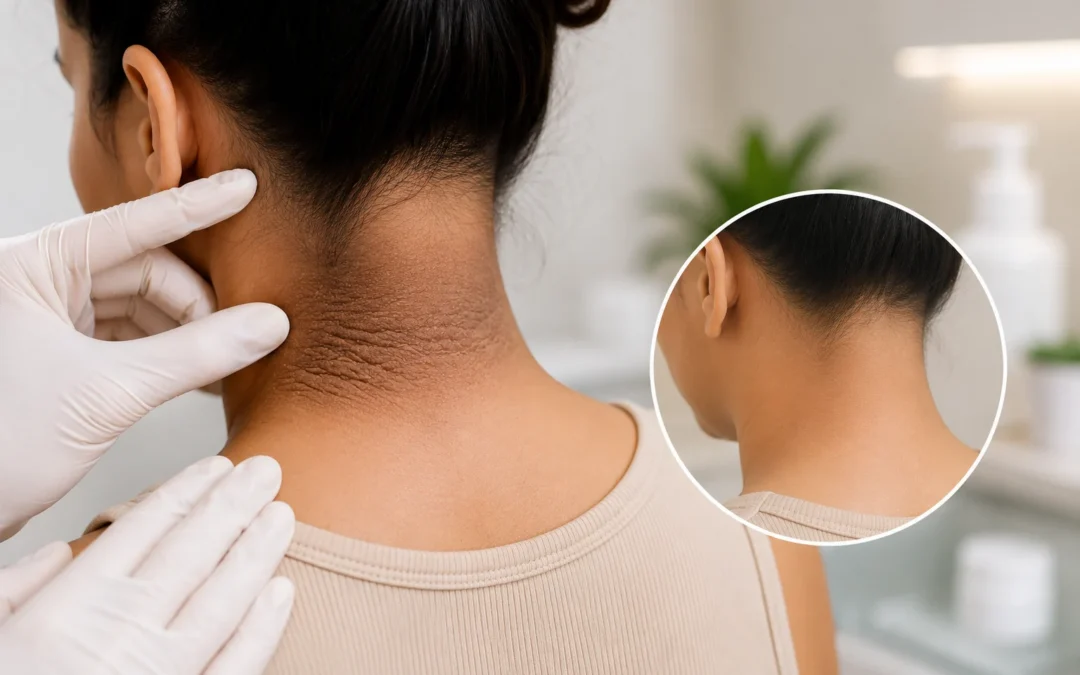
Acanthosis nigricans is a skin condition that causes dark, thickened, velvety patches, usually in body folds like the neck, armpits, and groin. It is not an infection or a hygiene problem, and it cannot be scrubbed away. Instead, it is usually a sign of an underlying issue, most commonly insulin resistance, that needs addressing.
The patches have a distinctive look and feel.
They appear darker than your surrounding skin, feel slightly thickened or velvety, and sometimes have skin tags nearby. The neck is the most common site, which is why many people first notice it there.
Crucially, this is a skin sign, not just a cosmetic flaw. It often reflects what is happening inside your body, which is why treating only the surface rarely works.
Why does your neck skin darken?
Neck skin darkens in acanthosis nigricans mainly because of insulin resistance, where high insulin levels stimulate skin cells to grow and produce more pigment. This is commonly linked to excess weight, type 2 diabetes, and hormonal conditions like PCOS. Less often, certain medications or, rarely, other health conditions are responsible.
The insulin connection is central.
When the body becomes resistant to insulin, insulin levels rise, and this excess insulin triggers skin cells to multiply and darken in the folds of the body. That is why the condition so often accompanies weight gain and metabolic issues.
The main causes include:
- Insulin resistance: the most common cause, often linked to weight.
- Type 2 diabetes: closely associated with the condition.
- Hormonal conditions: especially PCOS in women.
- Obesity: a major contributing factor.
- Certain medications: occasionally a trigger.
Is acanthosis nigricans a warning sign?
Yes, acanthosis nigricans can be an important early warning sign of insulin resistance and an increased risk of type 2 diabetes. It often appears before diabetes is diagnosed, making it a valuable prompt to get your blood sugar and metabolic health checked. Treating the skin without checking the cause misses this opportunity.
This is why it should never be dismissed as merely cosmetic.
Research shows people with acanthosis nigricans are nearly twice as likely to have type 2 diabetes than those without it. The skin change can be the first visible clue to a metabolic issue.
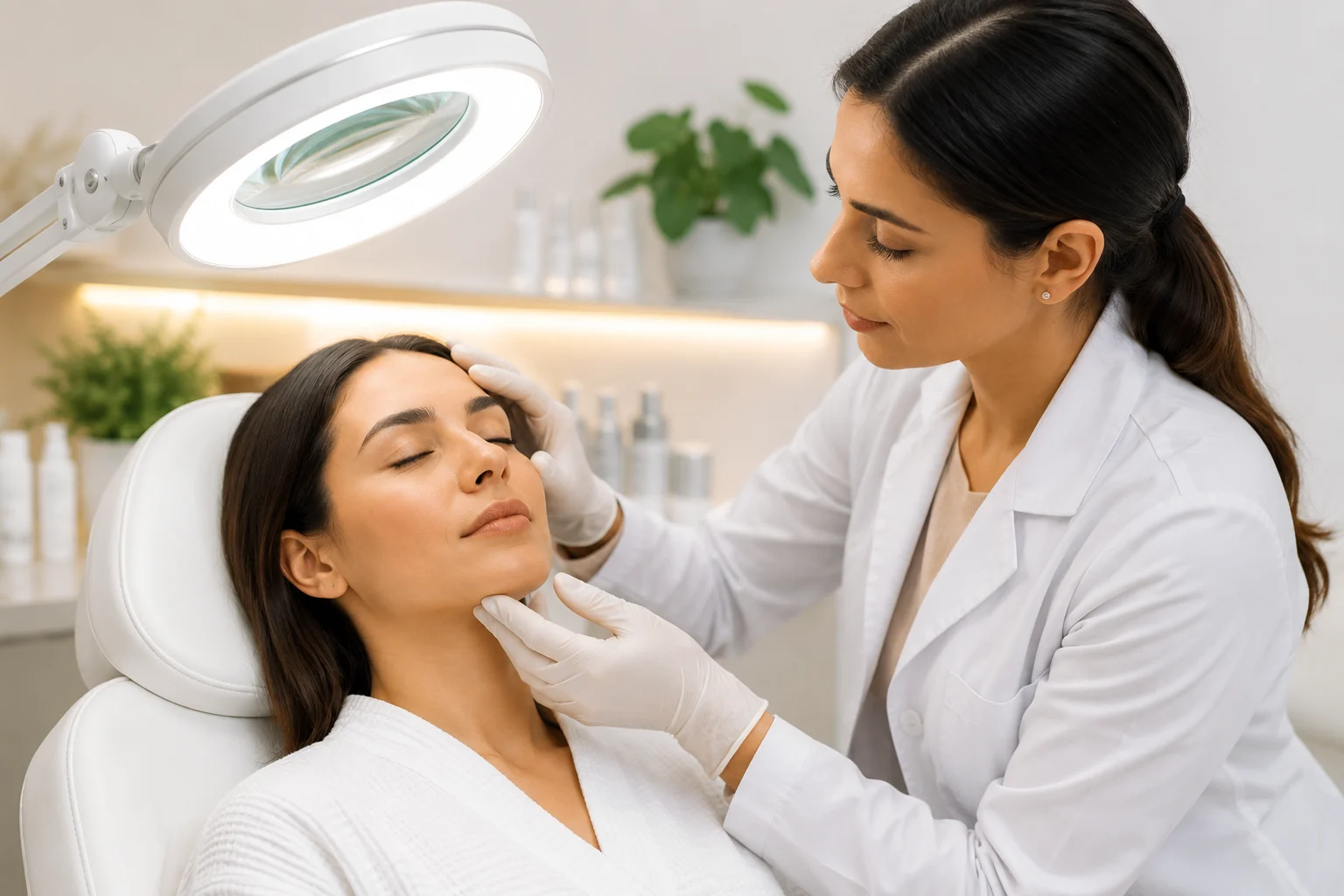
Seeing a dermatologist means the patches are assessed properly, and any underlying condition is identified early, when it is most manageable. That combined approach is what makes treatment effective.
How is acanthosis nigricans treated?
Acanthosis nigricans is treated most effectively by addressing the underlying cause, usually improving insulin sensitivity through weight management, alongside dermatologist-prescribed topical treatments to lighten and smooth the patches. Treating only the skin without the cause tends to give temporary results, so a two-part approach works best.
Here is how the main approaches compare:
| Approach | What it involves | Role |
| Managing the cause | Weight loss, blood sugar control, treating PCOS | Addresses the root, prevents recurrence |
| Topical treatments | Prescribed retinoids, exfoliating agents | Lightens and smooths the patches |
| Procedural options | Chemical peels, laser (in select cases) | Improves stubborn or cosmetic patches |
| Lifestyle changes | Diet and exercise | Improves insulin sensitivity long term |
On the skin side, topical retinoids such as tretinoin are the first-line treatment for lightening the patches, prescribed and monitored by a dermatologist. For stubborn cases, a cosmetic dermatology approach with peels can help. But the lasting fix comes from tackling the underlying cause.
Can you prevent acanthosis nigricans?
You can often prevent or improve acanthosis nigricans by managing your weight, staying active, and keeping your blood sugar in a healthy range. Because it is closely tied to insulin resistance, lifestyle changes that improve insulin sensitivity are the most effective long-term prevention, and they also benefit your overall health.
Practical steps that help include:
- Maintaining a healthy weight: the single most effective measure.
- Regular exercise: improves insulin sensitivity directly.
- A balanced diet: lower in refined sugars and processed foods.
- Managing conditions: keeping diabetes or PCOS well controlled.
These changes not only fade the patches over time but also reduce your risk of diabetes, making them well worth the effort. A dermatologist can guide the skin treatment while you work on the underlying factors.
Frequently asked questions
Is acanthosis nigricans dangerous? The skin condition itself is harmless, but it often signals an underlying issue like insulin resistance or an increased risk of type 2 diabetes. That is why it should be assessed by a dermatologist, so any underlying condition can be identified and managed early.
Can dark neck patches be removed permanently? They can be significantly lightened and, in many cases, resolved by treating the underlying cause alongside dermatologist-prescribed treatments. However, if the underlying insulin resistance is not addressed, the patches can return, which is why managing the root cause is essential.
Is acanthosis nigricans caused by poor hygiene? No. Acanthosis nigricans is not caused by dirt or poor hygiene, and it cannot be scrubbed away. It is a skin change driven by internal factors, most commonly insulin resistance, so scrubbing can actually irritate the skin and make it worse.
Does losing weight help acanthosis nigricans? Yes. Because the condition is closely linked to insulin resistance and excess weight, losing weight often improves insulin sensitivity and helps the patches fade. Weight management is one of the most effective long-term treatments, alongside topical care from a dermatologist.
Which doctor treats acanthosis nigricans? A dermatologist treats the skin patches and can identify the likely underlying cause, often coordinating with a physician for metabolic issues like diabetes. Seeing a dermatologist ensures both the appearance and the underlying health signal are addressed properly.
Why choose Dr Prratyush More for acanthosis nigricans
Because acanthosis nigricans is a skin sign of an internal issue, it needs a dermatologist who treats the cause, not just the surface, and this is where the clinic stands out in Thane.
The clinic takes a thorough, diagnosis-first approach, assessing the patches, identifying likely underlying factors like insulin resistance, and creating a plan that combines skin treatment with guidance on managing the root cause. Patients receive clear, honest advice rather than a quick cosmetic fix.
That medical, cause-focused approach is what makes the clinic a trusted name for dermatology in Thane.
Those dark neck patches are your body’s way of asking for attention, and the good news is that acanthosis nigricans is treatable when approached properly. Treat the cause alongside the skin, and the results last. If you have noticed darkening or thickening skin, book a consultation today for a proper diagnosis and treatment plan.